Blog

Seasonal Colours

Many churches mark the seasons of the church year by utilizing different colours. While there is some variety from one church to another, the most widely used colours are green, purple, white, red, and black. These colours add beauty to our worship space and highlight the theme of each season. Heres’ a quick guide to the different colours we use and their meaning:

White (or white and gold): Generally used during the seasons of Easter, Christmas, Epiphany/Baptism of Our Lord, Transfiguration Sunday, Trinity Sunday, All Saints Day, and Christ the King Sunday. It represents purity, holiness and heaven. It also calls to mind the swaddling clothes Jesus wore as an infant and the grave clothes he was wrapped in.

Purple: Used during Advent and Lent. Purple symbolizes repentance. It calls to mind the robe that was placed on Christ during his passion. Historically, only the very wealthy could afford purple fabric. Hence, it has associations with royalty, reminding us that Jesus is king.

Red: Used on Pentecost Sunday to call to mind the tongues of fire and the coming of the Holy Spirit. It is also used on Palm Sunday/Holy Week and on Reformation Sunday, because red is associated with the blood of the martyrs.

Black: Normally used on Ash Wednesday, it creates a somber mood of repentance. Sometimes it is used on Good Friday, but my own preference is to leave the altar bare on Good Friday, reminding us of how Christ was stripped and crucified.

Green: Green signifies new life and growth. It is used for the Sundays after Epiphany, as well as the Sundays after Pentecost, which means it is the colour in use for most of the year.

Augsburg Confession: Conclusion

At the end of the Augsburg Confession, there is a brief summary statement and a list of the signatories: https://bookofconcord.org/augsburg-confession/conclusion/

I hope you’ve enjoyed reading the Augsburg Confession with me. This will be my last blog post for a time. However, if you are interested in going deeper, here is my suggestion:

After this confession was submitted to Emperor Charles V, Roman theologians led by John Eck, responded. You can read their response here: https://bookofconcord.org/other-resources/sources-and-context/roman-confutation/.

Melanchthon was then tasked with writing a response to the Confutation, known as the “Apology to the Augsburg Confession.” You can read it here: https://bookofconcord.org/defense/

In my opinion, the best way to read these documents is to take them one article at a time. Read an article of the Augsburg Confession. Then read the corresponding article in the Roman Confutation. Then read the corresponding article in the Apology. Prayerfully look up the scriptures cited in support of each article. The Book of Concord website makes this easy to do.

Blessings,

Pastor Tim

Augsburg Confession Article XXVIII

Here is the link to the final article: https://bookofconcord.org/augsburg-confession/of-ecclesiastical-power/

This is another rather lengthy one. Here, the confessors argue that the church and state must be distinguished and their roles clearly delineated. The responsibility of civil authorities is to maintain good order and administer justice. They do so through legislation, law enforcement, and military power. Christians are not above the law. We are to obey the authorities (Romans 13) except when they command something contrary to God’s law. In such cases, the law of God supersedes man’s law (Acts 5:29). The state should not interfere with the church.

According to Article XVI, it is lawful for Christians to hold civil offices and participate in government. Indeed, it is good when Christians hold office. However, this article explains that the church should not usurp the role of the state. The church’s responsibility is to preach the word of God and administer the sacraments, presenting truth without coercion:

“Again, according to the Gospel or, as they say, by divine right, there belongs to the bishops as bishops, that is, to those to whom has been committed the ministry of the Word and the Sacraments, no jurisdiction except to forgive sins, to judge doctrine, to reject doctrines contrary to the Gospel, and to exclude from the communion of the Church wicked men, whose wickedness is known, and this without human force, simply by the Word.”

Furthermore, the church is not to impose unnecessary burdens on its members, nor to teach anything contrary to the pure gospel (Galatians 1:6-12).

Augsburg Confession Article XXVII

Here is the link to article XXVII: https://bookofconcord.org/augsburg-confession/of-monastic-vows/

This is a fairly long one, and it may not seem particularly relevant to our own time. In our culture today, we don’t see many people clamoring to take monastic vows. Yet in the middle ages, the monastic life was often upheld as the ideal life. Members of a religious order typically took vows of poverty, chastity, and obedience.

The problem was, many people were pressured into taking such vows at a young age, before they had life experience to make an informed decision. Further, for at least some, joining a monastery was seen as a way to win God’s favor and obtain salvation.

The argument in this article is that a vow taken for the purpose of earning God’s favor is a wicked vow, and those who have taken such vows should be released.

The monastic life, per se, is not a bad thing. However, it is wrong to think that we can merit God’s favor through our own works. It is also wrong to think that monks are more acceptable to God than any other Christian and their vocation.

Augsburg Confession Article XXVI

Here is the link to this week’s article: https://bookofconcord.org/augsburg-confession/of-the-distinction-of-meats/

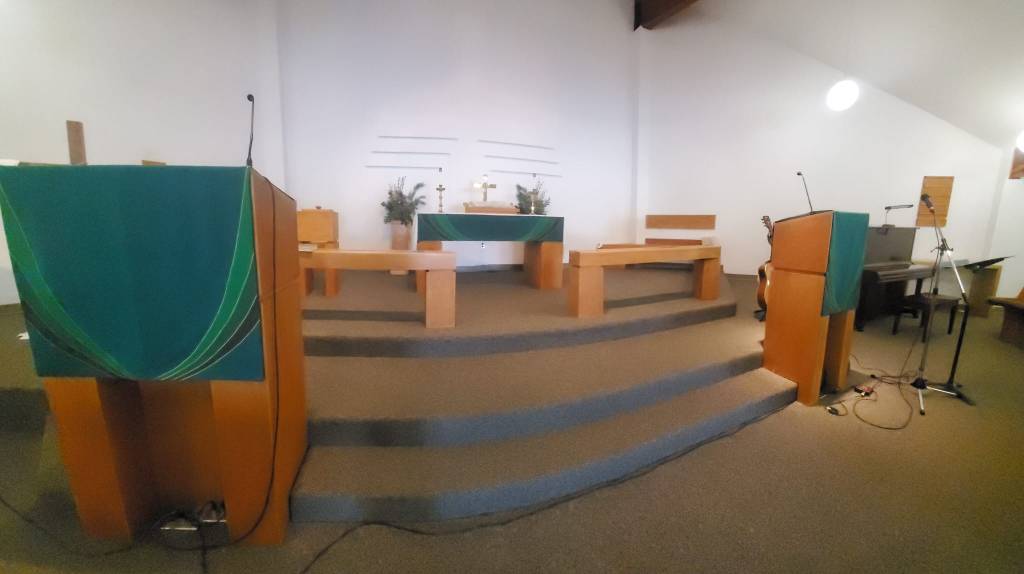
In the early centuries of the church, all kinds of traditions developed, many of which continue to this day. These traditions include the church calendar, seasons of fasting and seasons of feasting, the order of scripture lessons for use in public worship, the use of vestments, fixed prayers for use on special days, and other similar customs.

At the time of the Reformation, the church placed a great deal of emphasis on observing such traditions, but many people lacked an understanding of the meaning behind them. For example, there is a long-standing traditions of abstaining from meat during the forty days of Lent. This tradition does not come from Scripture. It is simply a custom that developed as a way to prepare for Easter. This can be a very meaningful practice. Yet at the time of the reformation, many people believed that their salvation depended on keeping such observances. This contradicts the clear teaching of scripture that salvation is by grace through faith (Eph. 2:8-9). Paul warns in the book of Galatians that those who rely on works for salvation have fallen away from grace (Gal. 5:2-4).

So the reformers emphasized that such traditions are not necessary. You are free to fast or not to fast. You are free to commemorate the feast days or not to do so. You are free to use pre-written prayers or to pray in a freer fashion. (Personally, I do both!)

At the same time, the reformers saw value in a lot of traditions. For the most part, Lutherans retained the order of the mass. They also kept the liturgical calendar. However, they noticed that there were so many festivals and saints days that it was burdensome to follow, that it distracted people from their vocations, and that people were often abusing the sacrament. So, instead of celebrating Mass every day, the Lutherans held public Communion only on Sundays and festivals such as Christmas and Easter. They removed a number of saints days from the calendar, and emphasized the fact that it is no sin to have simpler rites and ceremonies.

Tradition is a bit of a double-edged sword. It can serve a useful, didactic purpose, but it can also become burdensome or meaningless. When not understood properly, traditions can even become a harmful distraction from the free gift of grace offered in Christ Jesus.

Most Lutheran churches are very traditional. However, the Lutheran Brethren as a denomination is typically not, because of our unique history. In the 18th and 19th centuries, the Lutheran state church in Norway had become bound by traditionalism — emphasizing liturgy and ceremony more than a living faith in Jesus. Many people were baptized, attended church, and got confirmed without ever understanding the gospel or coming to saving faith. Lay preachers such as Hans Nielson Hauge began to hold Bible studies and prayer meetings in homes and to call people to repentance and faith.

The founders of the Church of the Lutheran Brethren were heavily influenced by this revival movement, and as a result, the LB historically has been less liturgical than other Lutherans. Our pastors don’t wear vestments, and many of our churches do not follow the lectionary. Yet this also should not be understood as a law.

The challenge of the church in every generation is to communicate the gospel of Christ in language that will communicate to people. In our own day, many younger Christians (including myself) are deeply interested in historic church traditions and liturgy, as they find it beautiful and moving.

In our congregation, I have attempted to ground our worship in historic practice, while at the same time utilizing the best of contemporary forms.
Augsburg Confession Article XXV

Here’s the link to Article XXV: https://bookofconcord.org/augsburg-confession/of-confession-xxv/

Confession of sin was already discussed briefly in Article XI. However, here in Article XXV, the confessors go into greater detail.

Historically, Lutherans have seen great value in the practice of private confession. How does this work? If you are troubled by something you have done, you ask to meet with your pastor privately and confess. If you are bound by a sinful habit, he may offer some words of advice from scripture. The most important thing is that, after hearing your confession, he will pronounce the absolution, exercising the authority that Jesus gave to his church in Matthew 16:19 and John 20:22-23. A faithful pastor will maintain confidentiality.

How does our practice differ from Rome? The main difference is that we do not set up burdensome laws around it. Rome requires Catholics to attend confession at least once a year and usually a token act of penitence (such as saying the rosary) is required before the priest will pronounce the absolution.

In the Lutheran church, we see confession as a gospel resource. Confessing to a pastor helps to break the stronghold sin may have in your life. Further, if you are troubled in conscience, the absolution will bring great comfort.

Augsburg Confession Article XXIV

Here is the link to this week’s article: https://bookofconcord.org/augsburg-confession/of-the-mass/

This article speaks to the church’s worship. While the Roman church had erred in many ways, there was nothing intrinsically wrong with the traditional order of service.

The early Lutherans were careful to preserve the traditional Mass, reforming only what was necessary. Perhaps the biggest change was that they began singing hymns in the vernacular. Luther and his colleagues wrote hymns in German, publishing the first hymnal in 1524. Over time, the Lutheran church would become renowned for its music. Lutheran composers, such as Michael Praetorius and J.S. Bach would have a major impact on the development of western musical forms.

The other major issue dealt with in this article is abuses of the Mass. At the time of the reformation, it was common for priests to say Mass for a fee: it was thought that just by celebrating Mass, the priest could vicariously remove sins. Further, although Mass was said daily, most laypersons received communion infrequently, if at all.

Because of the abuses associated with daily Communion, the Lutheran reformers returned to an earlier practice of having Holy Communion only on holy days (Sundays and Festival days), or it could be served on request (for example, when an individual is unable to attend the Sunday service). This is probably similar to the practice of the early church.

Much later (probably in the 19th century), many Lutherans moved from weekly to monthly or even quarterly communion. There were a number of reasons for this. Many congregations in North America lacked ordained pastors, so they only celebrated communion when a pastor could visit. Among pietistic Lutherans, there was a strong emphasis on receiving worthily; many feared receiving the Lord’s Supper without a period of personal preparation. Additionally, Lutherans have been influenced by other Protestant groups who place less emphasis on the Lord’s Supper.

At this point, monthly communion is a long-standing tradition, but perhaps it is worth re-examining our reasons.

If you’re interested in studying this issue further, here’s a helpful primer (and the source of some info in this post): https://steadfastlutherans.org/blog/2015/01/communion-every-sunday-surprise-surprise/#:~:text=But%20suddenly%2C%20in%20the%2019th,only%20four%20times%20a%20year.

Augsburg Confession Article XXIII

Here is the link to this week’s article: https://bookofconcord.org/augsburg-confession/of-marriage-of-priests/

This article deals with the issue of clerical celibacy. Are priests allowed to get married? Are vows of celibacy binding?

In answer to the first question, the reformers concluded that there is no Biblical reason to forbid marriage. Old Testament priests were not forbidden to marry.

The Bible indicates that Peter and at least some of the other apostles were married (Matt. 8:14-15; Luke 8:38-40; 1 Cor. 9:5). Further, the list of qualifications for a pastor includes the requirement that he only have one wife (1 Tim. 3:2). While this is probably intended as a prohibition of polygamy (not of single men serving the church), it does suggest that marriage was normal for pastors in the early church.

It’s true that in 1 Corinthians 7:7, St. Paul seems to suggest that he himself is single and that he wishes everyone else was also. However, he also acknowledges that his particular gift is unique.

The second question is harder to deal with. Vows should be kept (Deut. 3:21-23). But what if the vow itself is wrong? There are some examples of this in scripture (Judges 11; 1 Sam. 14:14-52).

In medieval times, vows of celibacy were often taken impulsively by young people who later came to regret them. The whole system led to severe abuses: since they could not marry, many priests had mistresses, and the church often turned a blind eye to such sexual sins.

Because marriage is established by God, no one should forbid it: hence, the reformers concluded that vows of celibacy required by the church were contrary to God’s law and were invalid.

On June 13, 1525, Martin Luther put this teaching into practice when he married Katharina von Bora.

Augsburg Confession Article XXII

Here is the link to Article XXII: https://bookofconcord.org/augsburg-confession/of-both-kinds-in-the-sacrament/

In medieval times, when the Lord’s Supper was celebrated, only the clergy were allowed to drink from the cup. The laity were given only the consecrated bread to eat. The primary justifications for this practice were:

  • That if the laity received the cup, there is a danger of spilling the blood of Christ.
  • That all of Christ is available in both the bread and the wine, and therefore it is unnecessary for laypersons to receive both elements.

The reformers recognized that this withholding of the cup was a recent innovation, and that from the early days of the church, Christian laypersons were allowed to receive both elements of the sacrament. Therefore, they restored the Biblical practice of distributing communion in both kinds.

The Roman Church maintained its stance until Vatican II, where it was determined that bishops may grant permission for laypersons to drink from the cup.

Augsburg Confession Article XXI

Here’s the link to article XXI: https://bookofconcord.org/augsburg-confession/of-worship-of-saints/

The first paragraph makes the following points: we can remember the saints who have gone before us and follow their good example. However, the Bible does not tell us to pray to saints or ask for their help. Scripture teaches us that Christ is our one “Mediator, Propitiation, High Priest, and Intercessor.” To put this another way: we can tell the stories of the saints. We can allow their memory to inspire us. We can give thanks to God for what he accomplished through them. But our prayers should be directed to God alone.

The second paragraph of this article serves as a sort of summary of all the articles up to this point. The confessors make an argument along the following lines: all of the articles in our confession come from scripture and are supported by church tradition. Therefore, we should be recognized as true catholics.

Following this article, there is a brief introduction to the next section: “Articles in Which are Reviewed the Abuses Which Have Been Corrected.” Up to this point, the confession has dealt primarily with doctrine. The remainder of the Augsburg Confession speaks more to the practical implications of our doctrine.